Rachel Hadas, David Mason: Poets of Place
The poet’s eye, in fine frenzy rolling,
doth glance from heaven to earth, from earth to heaven;
and as imagination bodies forth
the forms of things unknown, the poet’s pen
turns them to shapes and gives to airy nothing
a local habitation and a name.
When I host one of the poetry readings that John Foy, Linda Stern, and I put together at the Morningside Poetry Series on New York’s Upper West Side, I like to come up with a theme linking the two or three featured poets who are reading that day. Last Sunday, we had the good fortune to have Rachel Hadas and David Mason, two poets I regard as among the finest of their generation, read to us from their new books, Hadas’s Pastorals and Mason’s Cold Fire.
As different as the settings of their poems are, a theme linking these two masters of their art is the sense of place. In different ways, their work provides each subject with “a local habitation and a name,” as Theseus, the duke of Athens, says in Shakespeare’s A Midsummer Night’s Dream.
A local habitation and a name. Certainly, Hadas and Mason have both carved out impressive names for themselves in our poetry, and they sketch their many local habitations with great vividness, wisdom, and heart.
Besides her lyrical and elegiac evocations of her roots on the Upper West Side and her poems and translations situated in the classical and modern worlds of Greece and Rome, Hadas centers Pastorals on what she calls “The Old House,” her family home in St. Johnsbury, Vermont.
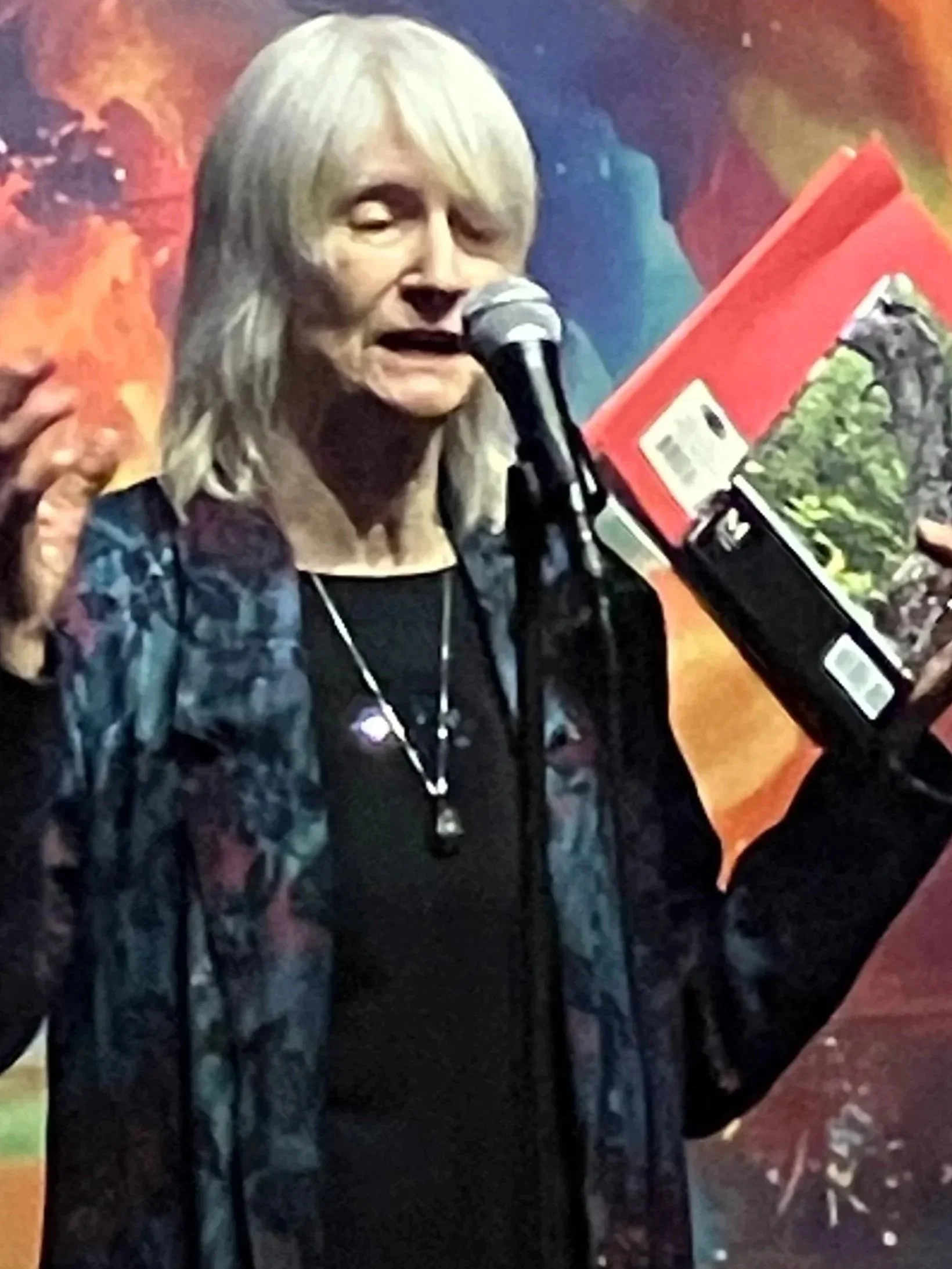
RACHEL HADAS
While you can only dimly hear the shepherd’s pipes of traditional pastoral in these poems in mellifluous prose, they rest squarely in the imaginative world of Virgil’s Eclogues and Hesiod’s Works and Days. There’s a delicious sense of time passing slowly, as if on a long summer afternoon. Here is the kind of silence in which you can hear yourself think. “Something, someone, is close by, attentive, listening,” she writes.
The poems evoke a dreamy, liminal, bucolic place populated by, as she writes in her dedication, “relatives and friends, neighbors and guests and ghosts, past, passing, and to come.”
Unlike Hadas, Mason traveled from a great distance to read his poems. His local habitation is Lutruwita, the indigenous name of Tasmania, Australia’s island state. But there have been many other stops along his way, all of them settings for poems: Greece, Turkey, India, and, especially, the American West. Born in Bellingham, Washington, he spent many years in Colorado, the setting for Ludlow, his extraordinary verse novel.

DAVID MASON
Set in Australia, the title poem of Cold Fire is a prime example of how far and deep the sense of place can be explored in a poem.
Written in Dantean terza rima, “Cold Fire” bores into Australia’s indigenous spiritual origins, its rituals, even its geology and botany:
Basalt crystals, like organ pipes in snow.
Snow melted back in wells around each fir
from the body heat of tree, and deep below
Finally, the details of agricultural ground-burning surface as an ars poetica. Here’s the ending of this remarkable poem:
I burn a cold fire here that runs in lines,
a sound like laughter and the hurt that learns.
Cold fire takes and teaches, and it talks in signs
until the fire and smoke are gone. And then it sings.