Lea Goldberg’s Late Silences
[The following is an abbreviated and edited version of a presentation I gave on the poetry of Lea Goldberg, one of the major Hebrew-language poets of the 20th century, on Yom Kippur at the Society for the Advancement of Judaism.]
Before we discuss Goldberg’s late poetry, I want to provide a brief account of her life based on information provided by the Israeli poet Rachel Tzvia Back in On the Surface of Silence: The Last Poems of Lea Goldberg, an extraordinarily beautiful, bilingual book in Hebrew and English that contains some of Goldberg's own drawings.
Arguably the senior member of the great generation of Modern Israeli poets that included Yehuda Amichai, Dan Pagis, and Dahlia Ravikovitch, Lea Goldberg was born in 1911 in Koenigsberg, an old German City that became part of the Soviet Union after World War II. She spent her early years in Kovno (now Kovnas) Lithuania.
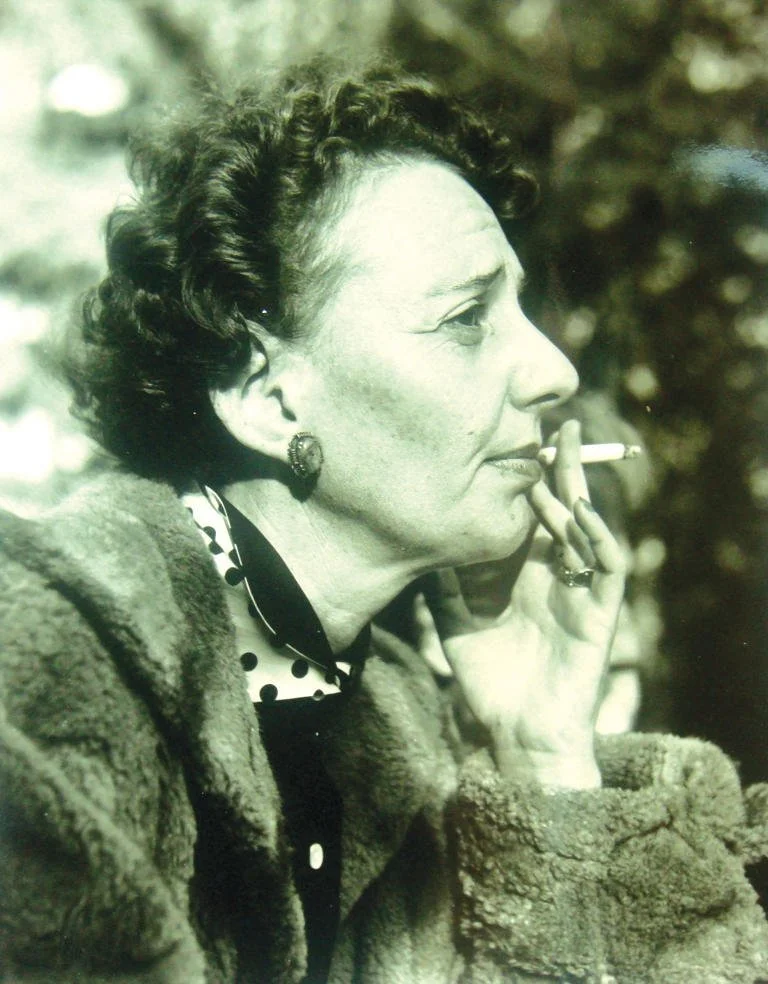
Lea Goldberg
Her first language was Russian, and she wrote her earliest poems as a schoolgirl in that language. Exiled from Lithuania to Russia in the wake of World War I along with many other Jews, the small Goldberg family wandered from place to place.
During the Goldbergs’ difficult journey back to Lithuania in 1917, Lea Goldberg's father was pulled from the train, arrested, and tortured. This is how the poet described the scene in her autobiography:
The border police of the little country. Ignorant farmers in army uniforms focused their gaze
on father's yellow shoes. They said that these shoes were an obvious sign that he was a Bolshevik spy. Then they imprisoned him in an empty stable. And every day, for ten days in a row, they took him out–as if they were about to execute him. The game went on for ten days. And the man broke–From then there was nowhere to go but to the hospital.
Goldberg's father suffered a devastating breakdown and was committed to a mental hospital, where he remained separated from the family for many years. Her parents were divorced in 1931.
As a student at the Hebrew Gymnasium in Kovno, Goldberg became fluent in Hebrew, her third language after Russian and German. She began writing poetry in Hebrew and expressing what Back refers to as “Zionist longings.”
During university studies in Kovno, Goldberg honed her Hebrew, worked hard at writing verse in her chosen literary language, and began publishing poems in Hebrew journals 1928 at around age 17.
In 1935, Goldberg immigrated to the British Mandatory Government of Palestine, settling in Tel Aviv for the next 17 years. Soon after, she arranged for her mother's immigration, and the two women lived together in Israel until Lea Goldberg died of cancer in 1970 in Jerusalem at age 58.
In Tel Aviv, she worked at various jobs, including children's book editor and literary theater consultant critic. In 1952, she moved with her mother to Jerusalem, where she became a lecturer in European literature at the Hebrew University there. Back describes Goldberg as "an extravagantly popular lecturer, with hundreds of students flocking to her lectures, which she delivered in a voice characterized as strange and smoke-filled."
Goldberg was an astoundingly prolific writer. Along with her ten collections of poetry and at least one novel, she wrote plays and widely beloved children's books of verse and stories. Perhaps even more impressive was her output as a translator of works in seven different languages into Hebrew, including Tolstoy's War and Peace, and plays by Shakespeare, Moliere, Ibsen, and Strindberg.
Since her death 56 years ago, Goldberg's fame has become more widespread in her adopted nation. An anecdote related by her friend, the poet Tuvia Ruebner, who died in September, suggests Goldberg's growing status in Israel:
On the sixth anniversary of the poet's death, we visited her grave, as we do every year. Her old mother remained standing by the grave. The cab driver, who had driven her up to the Jerusalem cemetery, turned to her and said: 'Don't be sad. What is life? We live and are forgotten. But she is not forgotten. Every day her songs are sung on the radio and the television, and her stories are told, even to the children.”
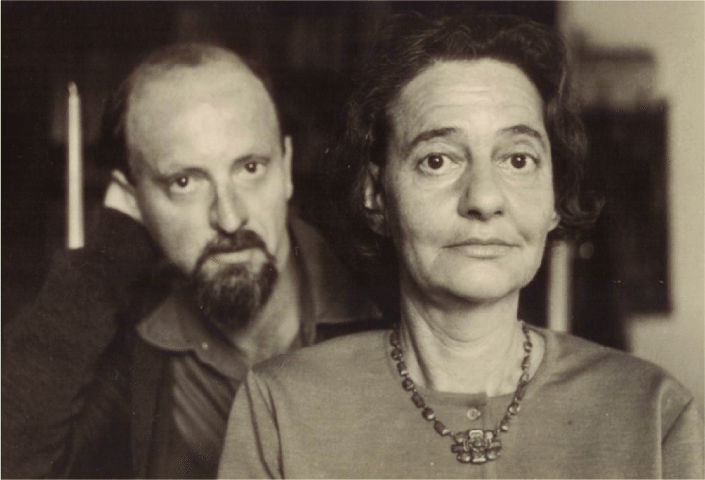
Lea Goldberg and Tuvia Rübner, April 29, 1963. Photo by Tuvia Rübner. Courtesy of T. Rübner.
Until the final poems of her career, Goldberg composed verse in sonnets and other traditional forms and in regular rhyme schemes and stanza lengths. In contrast, the English versions of the Hebrew poems that Back has translated are written in lines of irregular length and unpredictable rhyming.
Spare and short and direct, they can serve as texts for meditations. Surrounded by white space in the book, they invite us to look closely into their language and the flow of their thought. And as the book's title suggests, their words operate on the surface of silence. Indeed, the word "silence" (in Hebrew, "dumah") "appears many times and is suggestive of its many meanings.
On its most basic levels, silence can simply mean an absence of sound. If we apply emotional meanings to that definition, it can signify loneliness or solitude when there's an absence of other people, or a situation in which a person can have the chance to think or get to know herself better.
Silence can be associated with peace. It can embody the presence of death.
For this poet, ever acutely aware of the sense of place, the vacancies of the desert lands of Israel resonate with a silence as well as her own sense of exile. Channelling the Hebrew poets of medieval Golden Age Spain, the silence in a Goldberg poem can also suggest that there is no end to the suffering of the Jews in a non-Jewish world.
And yet she may find redemption in silence, in which the truth in language or the language of truth may arise in the form of a poem. Introducing On the Surface of Silence, Back writes: "Silence is the leitmotif in this book, as silence is the leitmotif of a poet's life…"
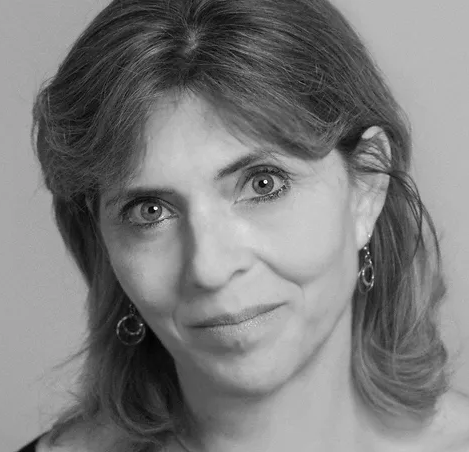
Rachel Tzvia Back
With a nod to Paul Simon, let's listen to some of Goldberg’s sounds of silence by zeroing in on a single, untitled poem. Here it is, in full:
A young poet suddenly falls silent
in fear of telling the truth.
An old poet falls silent fearing
the best in a poem
is its lie.
In just five lines, we see two uses of the word "silent." In this case, they occur in the context of the phrase "falls silent" (mishatek in Hebrew). Silence is presented to us following a verb, which puts it in the present tense: silence has happened to us right now. The adverb "suddenly" dramatizes the silence and adds to the fear each poet is experiencing.
The poem is also built on a parallelism between the two poets, revealing comparisons and contrasts. Here are two people who are poets who fear something. A young poet, however, is contrasted with an old one, and they fear contrasting things about their art: the truth and a lie.
The young poet's silence and fear seem easier to explain than that of the old one. Like any young person, the young poet may fear the difficult truths of becoming an adult, and, as a poet, making that fear a reality in the world by writing poems about it.
The old poet's fear seems more puzzling. Having written a lifetime's worth of poetry, why does she fear that the best part of her work may be a lie? (I use the pronoun “she,” to alert us that it’s a woman who’s written this poem that we’re reading. Indeed, Goldberg “saw herself as old even at a much younger age,” according to Rachel Tzvia Back.)
At first glance, it may seem that the old poet is suffering that sense of doubt that may strike any of us as we age: Has my whole life been a lie? Further, as Back writes, the fear of the old poet, and maybe that of Goldberg herself as she reaches the end of her life, is "one that results in self-silencing, which, for a poet, may be considered nothing less than self-erasure."
But there is another, less disturbing, interpretation of "the best in a poem is its lie." The phrase, it turns out, was written by Moses Ibn Ezra (c. 1060-c.1139), one of the major Golden Age poets.
What's more, the phrase continues, "and if the poem strips away its lie, it stops being a poem." So, are all poets essentially liars? Plato thought so, writing that they should be banished from the ideal Republic of the state.
Rachel Back tells us, however, that for Ibn Ezra and the other Golden Age poets, the "lie" is really just the art of a poem–its forms, its metaphors, its fictions. Goldberg writes in a resonant Hebrew language that echoes the texts of all her forebearers, from the Torah to her own lifetime, and in this poem, as poets tend to do, she is quoting a line she loves.
Moreover, Goldberg's work up to this point had been composed within the European tradition of formal aesthetic perfectability. These last poems, however, no longer adhere to classical forms, those "lies," in Ibn Ezra's terms. She may have felt that such formal “artificiality” could hinder the revelation of deeper truths about the onset of the end of her life. And those truths seem to have arrived in briefer, freer forms of poetry. The rest, as the dying Hamlet declares, is silence.