JENNIFER MICHAEL HECHT: 'PRAISE WILD DANCING IN THE KITCHEN'
GUEST BLOGGER: LINDA STERN
[Jennifer Michael Hecht delivered the Poetry by the Sea lecture on Thursday, May 21, 2026, at the Mercy Center, in Madison, CT. The following is a slightly edited version of the introduction to the lecture by Linda Stern.]
Over the years we’ve been delighted to present such distinguished speakers as A. E. Stallings, Julie Kane, Jehanne Dubrow, David Yezzi, and last year’s lecturer Major Jackson. This year it’s my great honor and pleasure to introduce an American poet and philosopher whose profound creativity finds expression in a range of literary accomplishments: Jennifer Michael Hecht.
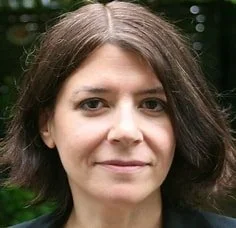
Jennifer Michael Hecht
“No, I will not leave you if you want to worship God.”
Hecht’s intellectual concerns are wide-ranging, and they have led her to publish significant general nonfiction as well: Doubt: A History (2003), an investigation of religious and philosophical doubt; The End of the Soul: Scientific Modernity, Atheism, and Anthropology in France (2003), which won the prestigious Ralph Waldo Emerson Award from the Phi Beta Kappa Society; The Happiness Myth: The Historical Antidote to What Isn’t Working Today (2008); Stay: A History of Suicide and the Philosophies Against It (2013); and most recently, The Wonder Paradox: Embracing the Weirdness of Existence and the Poetry of Our Lives.
Her volumes of poetry are equally impressive. The Next Ancient World (2001), won the Tupelo Press Judge’s Prize in Poetry, the Poetry Society of America’s Norma Farber First Book Award, and ForeWord Review’s Poetry Book of the Year Award. Her 2005 book of poetry, entitled Funny, won the Felix Pollak Prize in Poetry. Her latest book of poems is Who Said (2013).
In her prose, Hecht offers us important ideas with a disarming intimacy, as if she were just chatting thoughtfully with you over a cup of coffee, exposing her own personal experiences and feelings in the service of elucidating her thoughts. A review of The Wonder Paradox in the California Review of Books talks about Hecht’s “skillful method as an author.” That skill lies in Hecht’s ability to write with clarity, sincerity, and ease about really difficult subjects.
Hecht seems to be erecting civilization from the ground up, with ideas about history, the value of human life, and the universal nature of morality, as well as debates about God and religion. How can we live a good life? she seems to be asking again and again. And what is the place for poetry in that good life?
And this same thoughtfulness, combined with humor and a profound knowledge of history and the worlds of myth and ideas, permeates Hecht’s poetry.
Hecht’s list poem “No, I Would Not Leave You If You Suddenly Found God” begins with the line “Praise wild dancing in the kitchen” and then continues with “Praise” lines for about another 115 lines or so. Just when you, as the reader, are wondering where this is going, the poem interrupts itself with:
Praise that I can not stop making this list.
Praise the pleasure of making this list.
Praise whatever will finally stop my making this list.
Praise drinking with you and talking about poetry and sex.
Yet despite its meta consciousness, the poem goes on for many more lines, with its delicious evocation of Christopher Smart’s “Jubilate Agno,” through praises great and small, to finally end with:
Praise the mystical abundance of your horrifying heart.
No, I will not leave you if you want to worship God.
In the poem “Exodus,” Hecht recalls our shared mytho-literary inheritance: “Here is the taut muscle of memory, it jerks and flexes in our sleep.”
And then later on: “Here is the Nile, just as we left it. Here are the books, boiled in war.”
What is time? the poem seems to ask. What indeed is the sacred? And furthermore, who is that “we” in the poem? How are we, the reader, inextricably enmeshed in this inevitable story?
If we read Hecht’s poems seeking answers, we find ultimately that the questions themselves are the answers. Our inheritance as humans on this earth, moving through time together—that is our answer.
In a talk with Matthew Zapruder on Literary Hub, Hecht commented: “The heart of the poetic is the inexplicable, unpredictable, the wonder and the paradox of it all.”